AI in the Product Development Workflow: What's Actually Working
AI tooling is changing how product teams work — but the hype around it is obscuring which use cases are genuinely high-value and which are productivity theater.

The question isn't whether AI tools will change how product teams work. They already have. The more useful question is which changes are real improvements and which are just new ways to look busy.
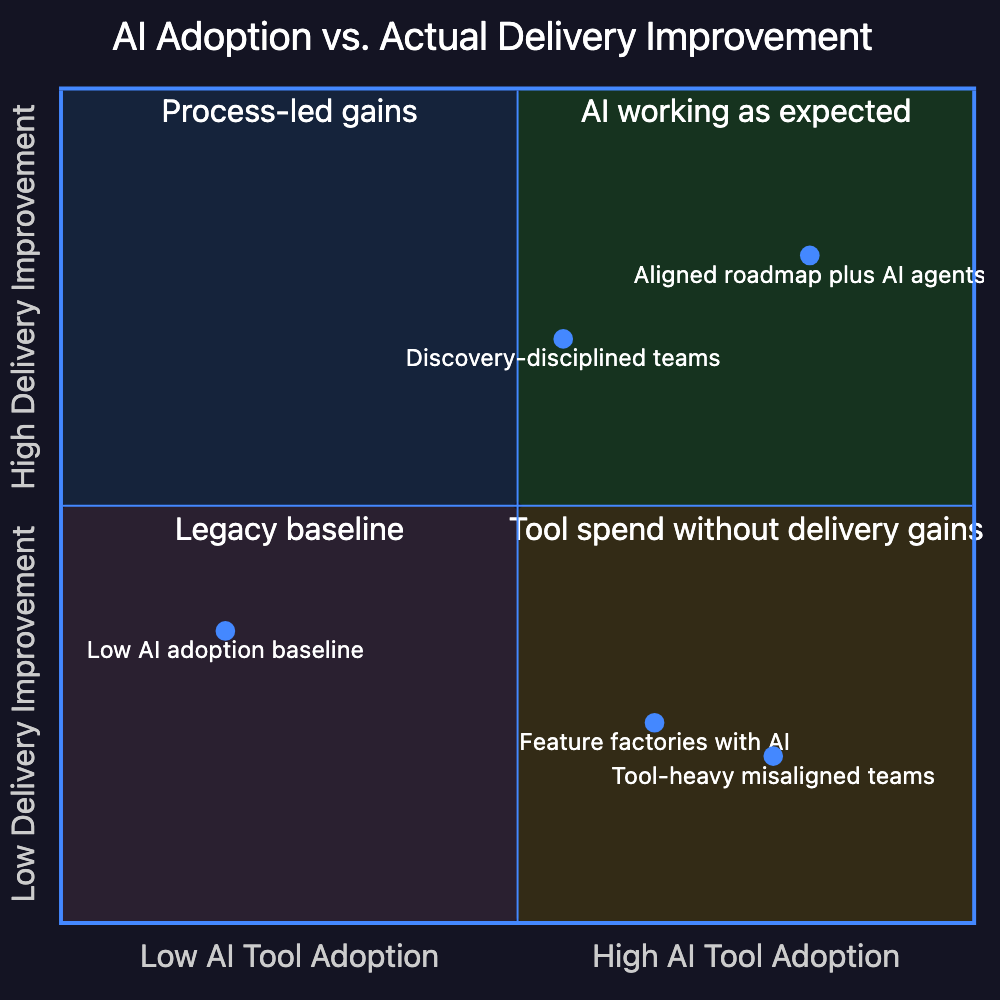
Product managers are adopting AI assistants at a high rate. Based on surveys from Lenny Rachitsky's research and ProductPlan's annual state of product management report, the majority of PMs now use AI tools at least weekly. Fewer than half say those tools have significantly changed their output quality. The gap between adoption and impact is where the useful patterns live.
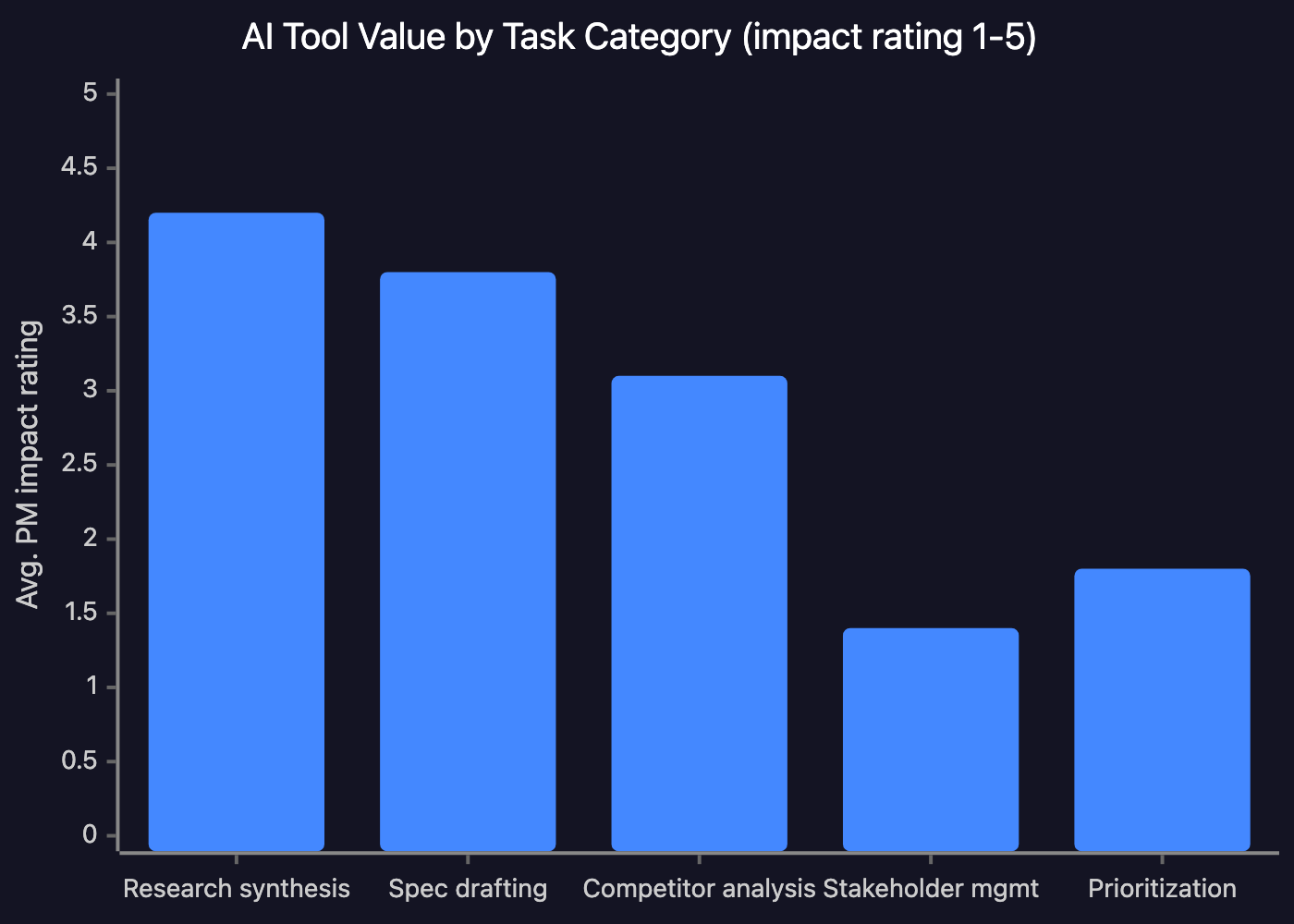
xychart-beta
title "AI Tool Value by Task Category (impact rating 1-5)"
x-axis ["Research synthesis", "Spec drafting", "Competitor analysis", "Stakeholder mgmt", "Prioritization"]
y-axis "Avg. PM impact rating" 0 --> 5
bar [4.2, 3.8, 3.1, 1.4, 1.8]
Where AI Tooling Is Genuinely High-Value
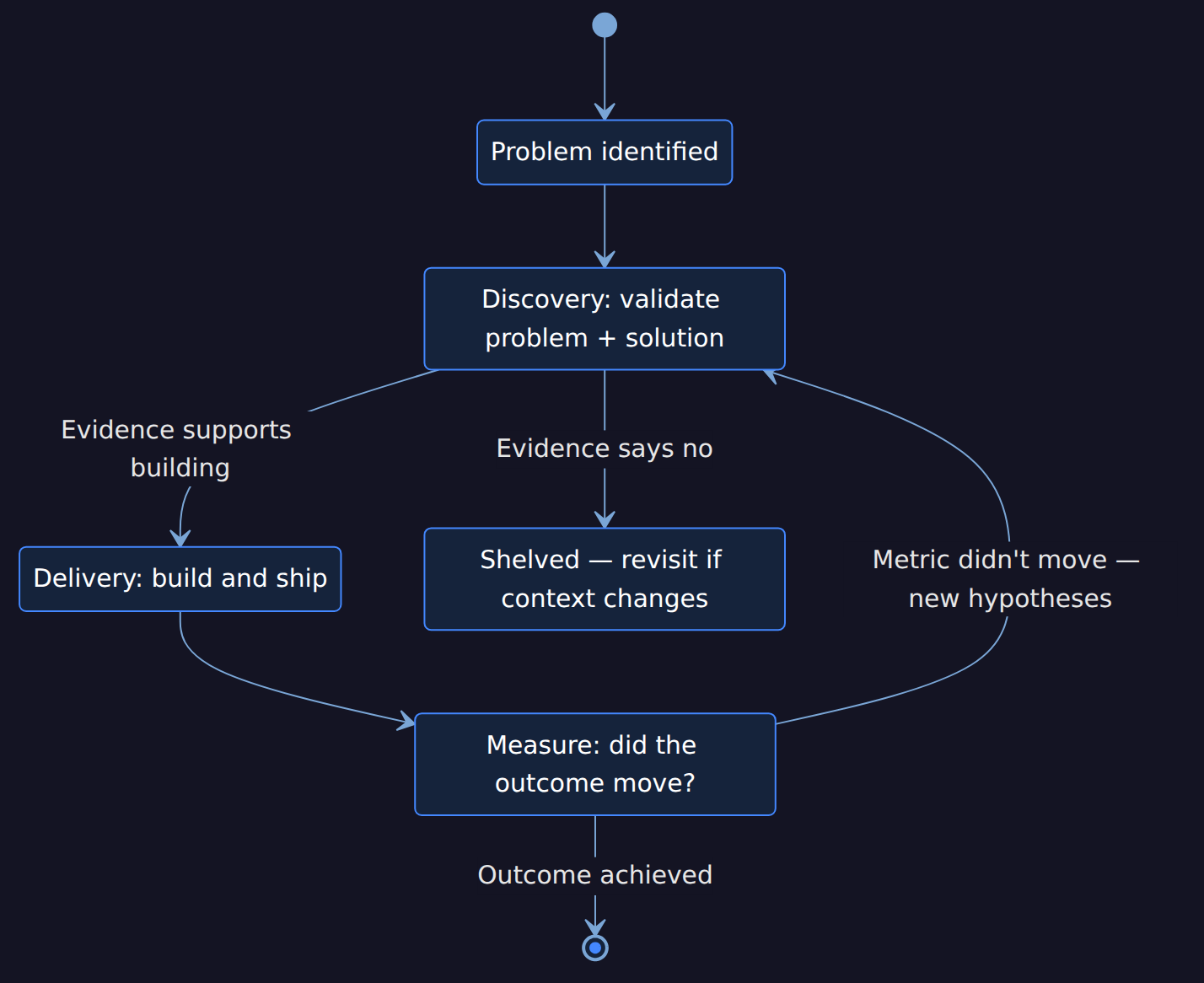
Synthesis of qualitative data. This is the clearest win. A product team running continuous discovery generates significant volumes of qualitative input: interview notes, support tickets, NPS comments, usability test observations. Organizing that input into themes has traditionally required significant analyst time or a dedicated researcher. AI tools can reduce that synthesis time by 60–70% for teams that invest in structuring their inputs well.
The constraint is input quality. AI synthesis is only as useful as the input it receives. Raw, unstructured interview notes produce thin output. Notes that follow a consistent format — context, verbatim quotes, observed behaviors, inferences — produce specific, actionable theme summaries. Teams that get real value from AI synthesis have usually built the input structure before they built the AI workflow.
Accelerating documentation and spec writing. Product specifications, acceptance criteria, release notes — these have high value but significant mechanical overhead. AI tools can generate a first draft from a rough outline in minutes. The PM's role shifts from drafting to editing and making judgment calls. For teams that spend hours on documentation, this is a meaningful time recovery.
Competitive and market research acceleration. Compiling a competitive landscape, summarizing analyst reports, monitoring for market developments — AI tools handle these reasonably well. The output still requires judgment (which competitor threats are actually relevant, which market signals are worth acting on), but the information gathering layer is faster.
Where AI Tooling Is Overhyped
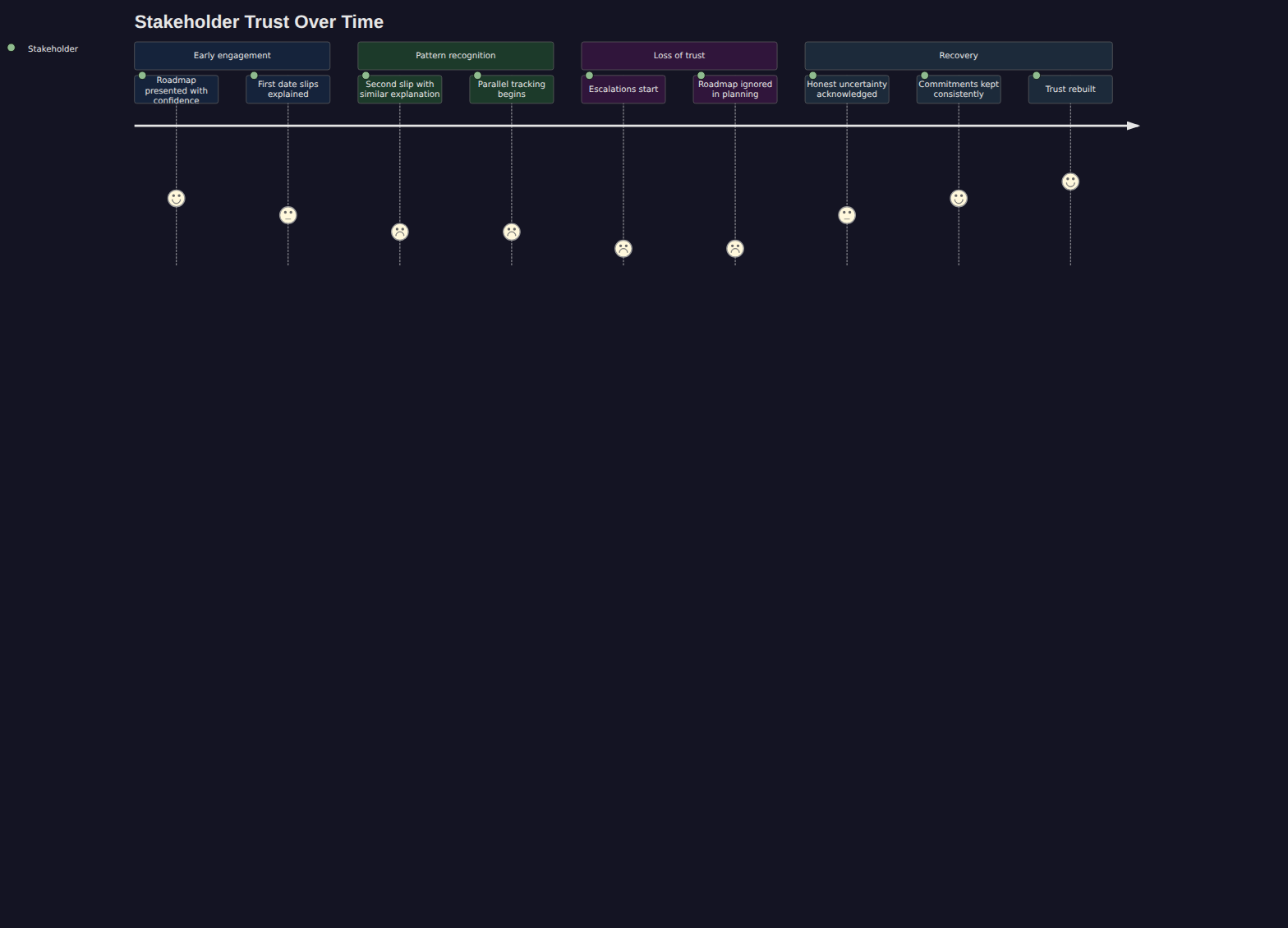
Prioritization. Every quarter, someone launches an AI prioritization tool that promises to rank your backlog based on impact and effort scoring. These tools are fine for organizing information. They are useless as substitutes for prioritization judgment, because prioritization is not an information problem — it's a stakeholder alignment problem. The backlog doesn't need to be ranked by an algorithm. It needs to be agreed upon by people with competing interests and incomplete information. No AI tool does that.
Stakeholder communication. AI can draft a stakeholder update. It cannot tell you which stakeholder to message first, how to frame the trade-off given what you know about each person's concerns, or when to delay the message because the timing is wrong. The mechanical writing is a small part of stakeholder work. The judgment that determines the outcome is not.
Strategy and positioning. AI tools generate plausible-sounding strategy. Plausible-sounding strategy that hasn't been tested against real market signals and real organizational constraints is not strategy — it's a hypothesis dressed up as a plan. Product teams that outsource strategic thinking to AI tools produce well-formatted documents that don't survive contact with reality.
The Pattern in Teams That Get It Right
The teams getting the most genuine value from AI tools have two things in common. First, they've identified specific tasks — not vague "use AI for productivity" — where the time savings are consistent and the output quality is high. They've turned those into team practices. Second, they're ruthless about not using AI tools for tasks where the real work is judgment, relationship, or organizational navigation.
The teams struggling with AI adoption are either using tools too broadly (AI for everything, producing inconsistent results) or too narrowly (AI for one use case, underdiscovering the adjacent value). The calibration happens through structured experimentation, not through purchasing an AI productivity suite and hoping.
The meta-skill that matters most right now is knowing the difference between a task that is mechanically complex and a task that is genuinely hard. AI tools are good at the former. They cannot help with the latter. Product managers who can make that distinction will compound their productivity. Those who apply AI tools uniformly will produce more output of inconsistent quality — which is not the same thing as more useful work.
Frequently Asked Questions
What are the highest-value AI use cases for product managers today?
The use cases with the clearest ROI are synthesis tasks — taking large volumes of qualitative input (user research notes, support tickets, NPS responses, interview transcripts) and identifying themes. What used to take a researcher two days of affinity mapping can be done in hours with a well-structured prompt. The second highest-value use is accelerating spec and documentation work — not replacing the thinking, but drafting the scaffolding so the PM can focus on the decisions.
Where do AI tools underperform in product development?
Anything requiring genuine organizational judgment. AI can summarize what stakeholders said. It cannot tell you which stakeholder to align with first, or how to frame a difficult trade-off for a risk-averse executive. AI can generate a list of potential product names. It cannot tell you which one fits your brand positioning and won't create problems in international markets. The pattern is that AI underperforms wherever the real work is navigating people and context, not processing information.
Should product teams adopt AI tools team-wide or let individuals experiment?
Let individuals experiment first, with intentional structured sharing. The reason is that AI tools have highly variable value depending on how the work is structured. What saves a PM three hours a week might save a designer thirty minutes. Mandating adoption before understanding which tasks actually benefit creates compliance theater. The better model is to identify the two or three use cases where individual experiments show the most consistent time savings, then build those into team norms.
How is AI changing the skills product managers need to be effective?
The skills becoming more valuable are clarity of thought and quality of judgment — the ability to define a problem precisely enough that an AI tool can produce useful output, and then to evaluate that output critically. The skills becoming less differentiating are the mechanical ones: writing the first draft, reformatting data, generating option lists. The net effect is that the ceiling for effective PMs is rising because good judgment goes further when it's not bottlenecked by mechanical work.